 APY PREMIUM GROUP
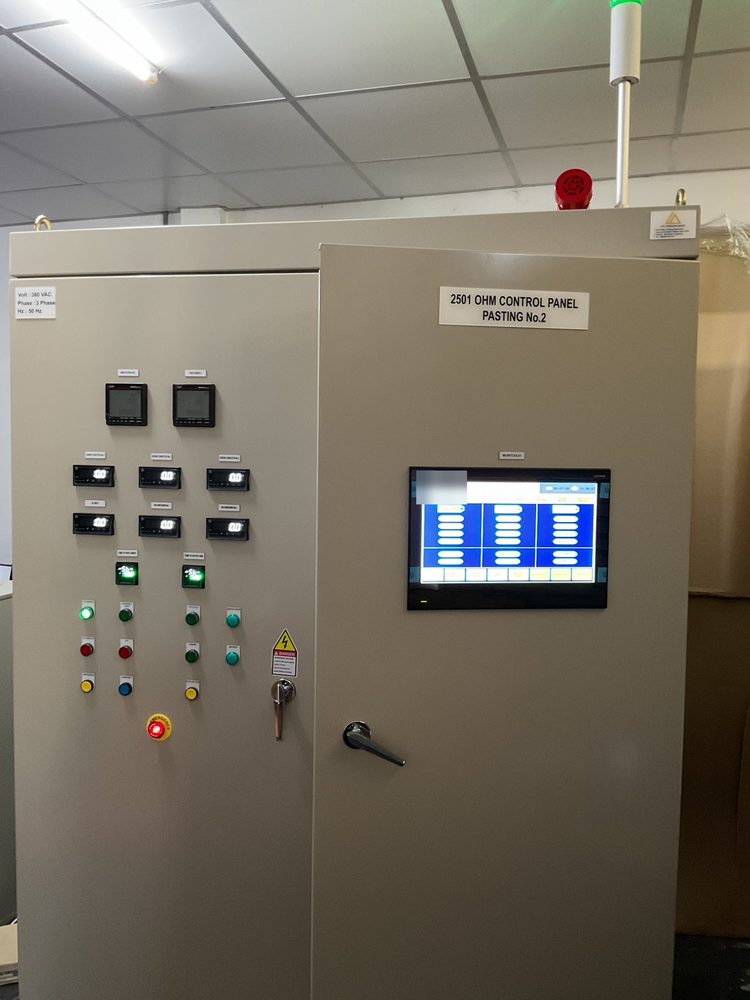
Most machine control renovation projects are not difficult because of the technology. They are difficult because of time — the machines that need the work are usually the machines a plant cannot afford to stop. This article describes how our team approached the complete replacement of the control panel, wiring, pneumatics and weighing system of a raw-material mixing machine at a battery manufacturing plant, where the available production shutdown window was just four days. All photographs are from this project, with client-identifying details removed. We do not disclose the client name, the contract value, or any commercial details.
The brief
The mixing machine feeding the production line had been running for many years in an environment that is genuinely hostile to electrical equipment — raw material dust, acid fumes, humidity and high ambient temperature. What the plant was experiencing will be familiar to any plant engineer:
- Relays and contactors operating unpredictably, with replacement intervals getting shorter
- Wiring and flexible conduit inside the panel degrading from acid fumes and accumulated heat
- The raw-material weighing system drifting, which affects mix quality directly
- The controller and operator terminal approaching end of support, with replacement parts increasingly hard to source
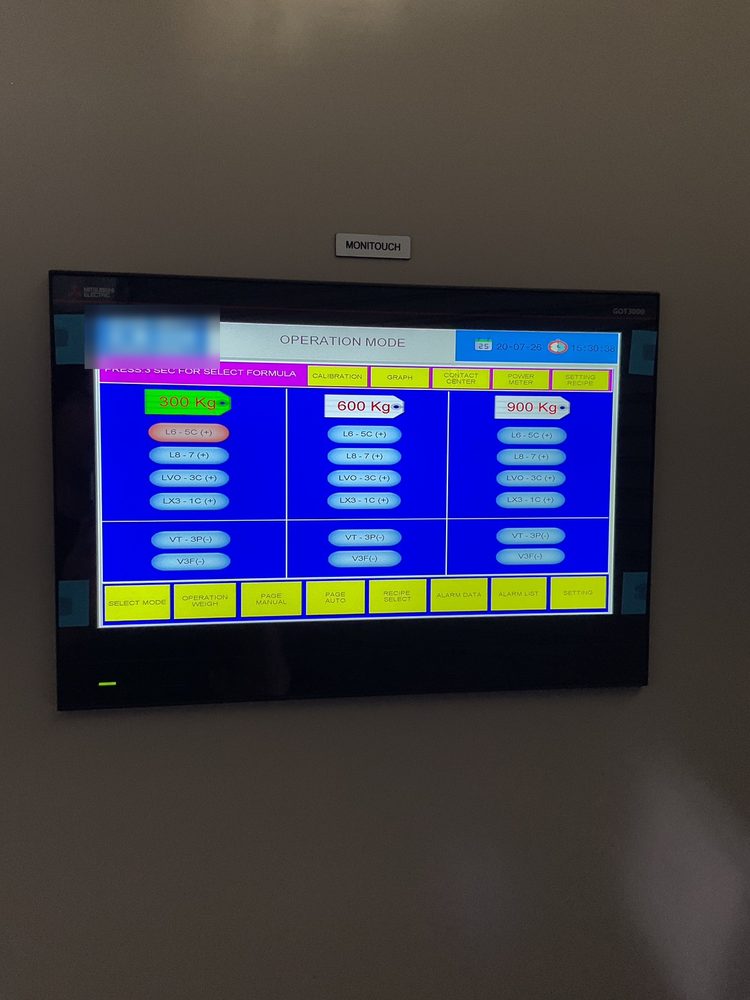
The agreed scope was therefore not "swap the PLC". It was a near-complete rebuild of the machine's electrical and control systems: a new control panel, rewiring to national standard, new breakers, transformers, relays, contactors, switches and indicator lamps, replacement of all pneumatic tubing and cylinders, new load cells on the material and liquid tanks, plus a completely new control program and operator screen design.
All of which had to be physically installed inside a shutdown window the plant had fixed in advance — four days.
The time constraint dictates the method for the whole project
When the shutdown window is short, there is only one governing principle: move as much work off site as physically possible, and leave inside the window only what genuinely cannot be done anywhere else. This is how we split the work.
| Type of work | Where | Why |
|---|---|---|
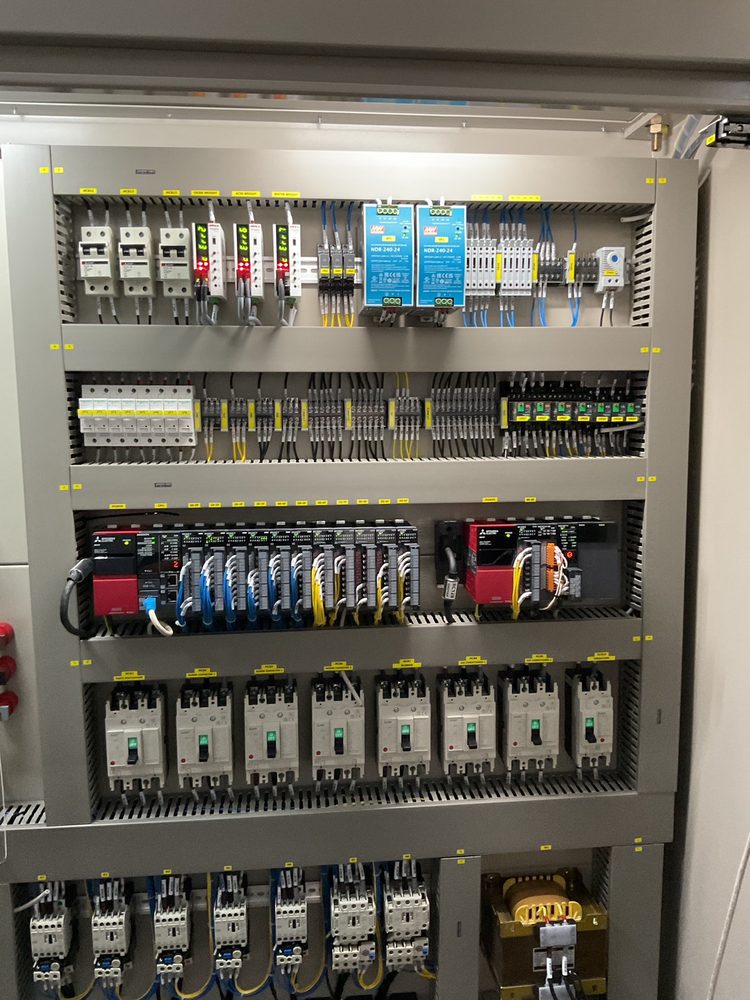
| Panel build, internal wiring, ferruling every conductor | Contractor's workshop | The most time-consuming work of all, and none of it needs to happen on site |
| Control program and operator screen development | Contractor's workshop | Can be tested against the real panel long before the shutdown |
| Full I/O testing and sequence testing (FAT) | Contractor's workshop | Where most problems surface — they must surface before the panel is loaded onto the truck |
| Initial load cell calibration | Contractor's workshop | Done with certified test weights; only fine adjustment remains on site |
| Additional cable runs, mounting points, power feeds | On site, before the shutdown | Can be done while the machine is still running normally |
| Removing the old panel, installing the new one, terminating to the machine | On site, inside the window | Unavoidable — requires isolation and disconnection from the machine itself |
| Live running tests, tuning, operator training | On site, after installation | Requires real material and real operating conditions |
Split this way, what actually has to happen inside the four days reduces to "remove, lift, terminate, verify" — work whose duration can be estimated with reasonable confidence. Programming and cable tracing, by contrast, cannot be estimated at all once something unexpected appears.
FAT is the heart of this kind of project
A Factory Acceptance Test is a full test of the panel and program at the contractor's workshop before shipment, witnessed and signed off by the client's engineer. Many plants see FAT as a formality that slows the project down. In reality it is the single thing that makes a short shutdown window feasible.
The reasoning is simple. A problem found in the FAT room is fixed in hours, while the production line is still running and earning. The same problem found after the panel is on site becomes an extra day or more of downtime, usually resolved under pressure with everyone watching.
The 9-section FAT checklist we use
This is the structure our team uses for control panel work. Plant owners can reasonably ask any contractor to send a document of this kind for review before the FAT date.
| Section | What gets verified |
|---|---|
| 1. Documents | Drawings at latest revision, bill of materials matching the quotation, correct panel nameplate, scope matching the purchase order |
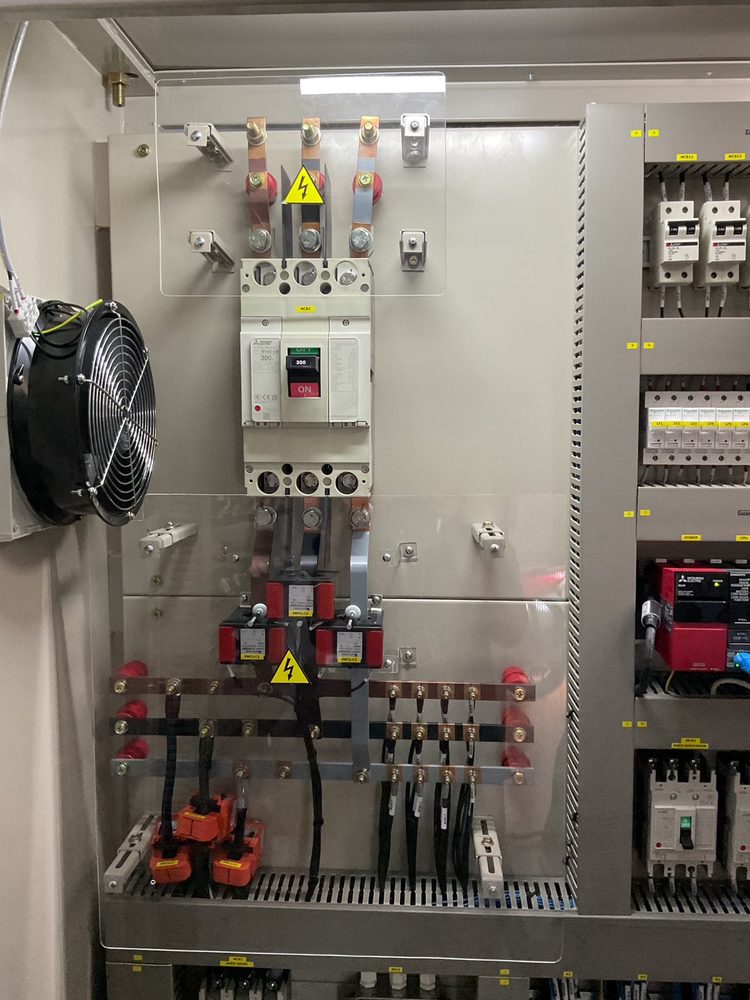
| 2. Panel and wiring | Panel dimensions and colour per drawing, wiring per the electrical diagram, 100% of conductors and terminals labelled, terminal tightness, power and signal segregation, complete grounding bar and bonding |
| 3. Electrical safety | Insulation resistance, continuity of main circuits, earth continuity to every exposed metal part |
| 4. Power-up | Correct incoming voltage, control power supply holding under load, breaker and fuse ratings matching the drawing on every device |
| 5. Controller (PLC) | CPU healthy with no fault indications, correct program version with a backup file handed over, all communication stations online, every input and output tested against the I/O list, signed test report issued |
| 6. Operator terminal (HMI) | Clean boot, every screen reachable, displayed values matching the controller, alarms displaying correctly and logging to history, accurate touch response |
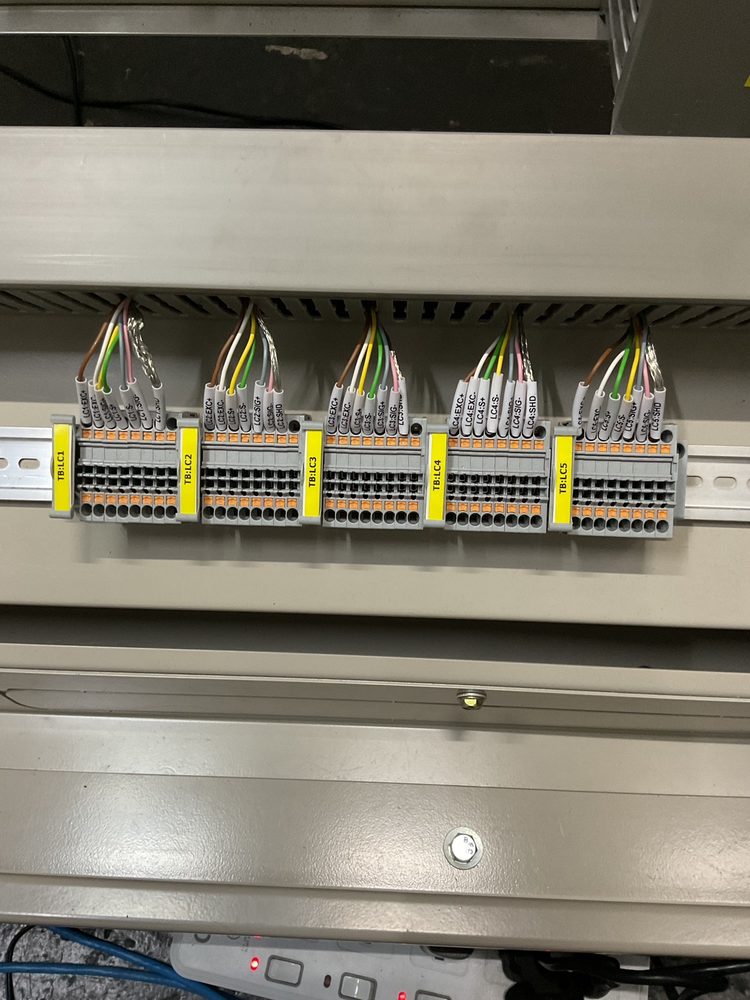
| 7. Weighing system | Correct load cell wiring and single-point shield grounding, stable zero, span calibration against certified weights, repeatability tested at least three times, weight values agreeing across indicator, controller and screen |
| 8. Functional testing | Every manual function, a full automatic cycle, every interlock, alarm actions at the designed severity levels, emergency stop halting immediately with a correct reset procedure, and safe-state recovery after a power failure |
| 9. Sign-off | Punch list with owners and due dates, and an explicit joint decision on whether open items affect installation |
The last item in section 8 — power failure and recovery — is the one most often skipped, and the one that causes the most site problems in plants with an unstable supply.
10 items to settle before signing a control panel replacement contract
This list comes from the points that genuinely had to be closed out on a project of this type. The more of them are resolved before the purchase order, the lower the risk of scope creep.
- The shutdown window — how many days, which dates, and whether they are flexible or fixed by the production plan
- FAT date and location — must be a real date, not "to be advised", because it drives both the shipping date and the installation date
- Communication protocol — decided before ordering, because it determines both module selection and wiring method
- Extent of rewiring — inspected jointly on site and documented, run by run
- Cut-out dimensions and installation space — measured physically, never taken from old drawings
- Free-issue items supplied by the client — exactly what, who owns the delivery date, and what happens to the schedule if they are late
- Documentation deliverables — language, number of sets, and contents (assembly drawings, electrical drawings, maintenance manual, troubleshooting guide, parts list)
- Calibration certificates — for weighing or measurement equipment, with the standard and the delivery date stated explicitly
- Warranty scope — parts only or parts and labour, and the date from which it starts
- Definition of a "minor change" — agree what level of process adjustment sits inside the original scope and what requires a written change order
Items 2 and 6 have the largest schedule impact, and are usually the two left open the longest.
Outcome and deliverables
The project has been completed and closed out, following the handover sequence planned from the start.
- FAT at our workshop, witnessed and signed off by the client's engineer, before the panel left the building
- Installation and startup inside the plant's planned shutdown window, with a daily written progress report to the client throughout
- Live running tests and tuning alongside the plant team, until results met the agreed criteria
- Operator and safety training, so the plant's own people can run and maintain the system
- Full documentation handover — assembly drawings, electrical and sequence drawings, maintenance manual, troubleshooting guide, parts list, program backup files, and the weighing system calibration certificate
- One-year parts warranty from handover
Lessons that transfer to other plants
- An existing sister machine is a gift — if the plant already runs an identical line, use it as the prototype for the program, the panel layout and the busbar arrangement. Commissioning time drops sharply, and the maintenance team supports both lines with one body of knowledge.
- Budget more time for the survey than seems necessary — hours spent measuring openings, tracing cables and photographing panels are repaid several times over on the day the line is down.
- Installation complete is not project complete — tuning, punch list closure, training and document compilation always take real time. Plan for them from the start rather than letting them appear as a delay at the end.
- Send the client a daily progress report during installation — the cost is one email a day, and it keeps everyone aligned on status while creating an excellent record for handover discussions.
- Test for the worst day, not the best — voltage dips, loss of air, a dropped sensor, an operator pressing things out of sequence. A good system returns to a safe state under all of these, not just when everything is available.
If your plant is weighing repair against renewal, read Is retrofitting old machinery worth it? and Obsolete PLC and HMI: what to do when spares run out, or see our PLC control systems service page.
Summary
Replacing the control panel of a machine that cannot be stopped is decided before installation day, not on it. A well-prepared contractor finishes most of the work in their own workshop behind a rigorous FAT, and leaves only estimable work for site. A well-prepared plant closes out scope, FAT dates and its own free-issue items before the purchase order is raised. When both sides do their part, a shutdown window that looks alarmingly short becomes entirely manageable.